HPV - Genital Warts
HPV - Genital Warts
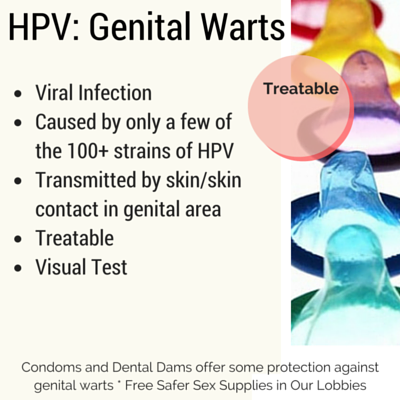
Genital Warts are caused by a strains of a common virus, Human Papilloma Virus, and are like any other warts. They are treatable, but not cureable. It spreads through skin/skin contact via vaginal or anal sex.
The human papilloma virus (HPV) is the group of viruses that are associated with genital warts. There are several types of HPV, some cause visible genital warts. Other types of HPV that are not visible are associated with cervical dysplasia (abnormal pap smear). If a woman has been diagnosed with HPV, her partner has about a 70% chance that they too are infected but rarely with symptoms.
Symptoms.
- Genital warts can multiply in cauliflower-like clusters.
- They are warts in the genital and anal area.
- They have no feeling when touched, but can itch or bleed when irritated.
- Sometimes warts will be found in a woman during a physical exam because they are easily visible on the cervix or have appeared after the application of acetic acid (vinegar) to the genital area.
What Are The Health Problems Associated With Genital Warts?
- Genital warts can become worse in pregnancy and may bleed due to hormonal changes. Rarely does this affect the birth of the baby or necessitate the need for a Cesarean section
- Many people who have genital warts will find that eventually the virus will become dormant in the body and outbreaks will stop on their own.
- Sometimes warts will be found during a physical exam because they are easily visible on the cervix or have appeared after the application of acetic acid (vinegar) to the genital area. An abnormal pap smear may be the first sign that a woman has sub-clinical HPV. A further evaluation called a colposcopy, and often biopsies, are necessary to confirm the presence of HPV. It is important to understand that treatment for HPV is not absolutely necessary. Research so far has shown no proven benefit in trying to treat sub clinical (non-visible) HPV. It is recommended that more frequent pap smears be done (minimally every year) to watch for pre-cancerous changes to a woman's cervix caused by HPV. The HPV virus will spontaneously subside in many women. If you get an abnormal pap smear while taking the Pill, you may consider stopping the Pill to see if your pap goes back to normal.
Confidential Testing
You can make an appointment for an examination, if you think you may have genital warts. We offer home remedies as well as treatment in the clinic.
Treatment
The usual treatment is a topical medication. If warts are in the vagina, other treatments must be used (freezing or burning the warts). Many people who have genital warts will find that eventually the virus will become dormant in the body and outbreaks will stop on their own.
Dealing with your diagnosis of HPV, in any form, can be frustrating, when you do not know when or from whom you contracted the virus, and because of the threat of cervical cancer. Remember that most Americans have been exposed to an HPV virus that will remain dormant in the body. HPV can be managed with regular pap smears that can detect pre-cancerous cell changes
To maintain a healthy immune system, and help in the treatment of genital warts, take
- Folic Acid: .8mg/daily, part of a B Vitamin complex. Take with Vitamin B-12. Especially important for people taking Birth Control Pills.
- Vitamin B-6 50 mg/daily Again, important for Pill users.
- Vitamin C 500-3,000 mg/daily
- Vitamin E 400 units/daily
- Vitamin A 800 mcg/daily
- Zinc 12 mg/daily
- Selenium 55 mg/daily
For Information on the HPV Vaccine, please visit here.
Test Your Knowledge
1. True or False: A person of any gender can give warts to a person of any gender.
2. True or False: Barriers, like dental dams and condoms, offer some protection against transmitting or receiving genital warts.
3. True or False: Most people with genital warts find that eventually the virus becomes dormant in the body, and they don't experience outbreaks.
4. True or False: Most people will have a sexually transmitted infection during the course of their lifetime.
All True!