Pelvic Inflamatory Disease
Pelvic Inflammatory Disease
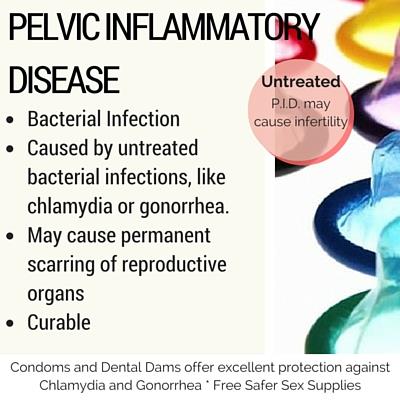
Pelvic Inflammatory Disease (PID) is an infection of the uterus, ovaries or fallopian tubes which is caused by bacteria, gonorrhea or chlamydia growth. PID occurs when an infection goes untreated. Some of the complications include: damage or scarring of the fallopian tubes; this can cause sterility and place a woman at higher risk for developing an ectopic (tubal) pregnancy.
The most common way to contract PID is through sexual contact with an infected partner. Other women at higher risk for developing PID include those women who are using the IUD as a method of birth control. Some medical researchers believe that a woman who has many sexual partners is slow at higher risk for developing the infection. This has not yet been adequately substantiated.
Symptoms
In 80% of cases, women with gonorrhea have no symptoms and therefore can go untreated. After a period of time, the infection will travel into the uterus, tubes and ovaries causing some of the following symptoms:
- Pain and cramping in the lower abdominal area
- Diarrhea and vomiting
- Pain with intercourse or bleeding
- Fever
- Unusual bleeding or discharge from the vagina
Confidential Testing
Sometimes pre-menstrual symptoms or ovulation can feel like PID; it is therefore important to have an exam by a nurse practitioner or physician to confirm your condition.
Treatment
- Antibiotics.
- Rest and avoid sexual intercourse during treatment.
- Your partners should also be examined and treated if STD is the cause of PID.
- Warm baths can ease discomfort.
- If you are wearing an IUD, you should have it removed.
- For pain or fever, take aspirin, aspirin substitutes, or drink comfrey tea.
It is also important if treated for PID that you return for your follow-up exam. Since various viruses or bacteria can cause PID, the first treatment given to you might prove to be ineffective. Blood tests (measuring white blood cell count) can be preformed to insure that your infection is gone.
Test Your Knowledge
1. True or False: Pelvic Inflammatory Disease is caused by an untreated bacterial infection.
2. True or False: Condoms are a HIGHLY effective way to prevent the transmission of Chlamydia and Gonorrhea.
3. True or False: Chlamydia and Gonorrhea do not often have symptoms for women and trans* folks.
4. True or False: If you're have anal, vaginal or oral sex, the only way to know if you've been exposed to a bacterial STI is to get tested.
5. True or False: Most people will have a sexually transmitted infection during the course of their lifetime.
All True!